Ringo Starr 林戈·斯塔尔
林戈·斯塔尔
R·S· / R·S·斯塔尔 / Richard Starkey地區英国
類型个人
藝人資料
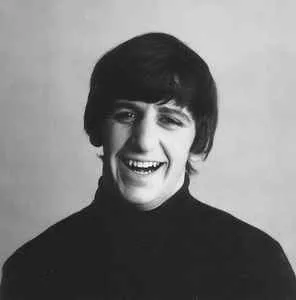
林戈·斯塔尔(Ringo Starr),原名理查德·斯塔基(Richard Starkey),1940年7月7日生于英国利物浦,英国音乐家、演员、鼓手,大英帝国勋章获得者,披头士(The Beatles)乐队成员,2015年入驻摇滚名人堂。
Sir Richard Starkey MBE(born 7 July 1940), known professionally as Ringo Starr, is an English musician, songwriter, singer, and actor who gained worldwide fame as the drummer for the Beatles. He occasionally sang lead vocals, usually for one song on an album, including "With a Little Help from My Friends", "Yellow Submarine", "Good Night", and their cover of "Act Naturally". He also wrote the Beatles' songs "Don't Pass Me By" and "Octopus's Garden", and is credited as a co-writer of others, including "What Goes On" and "Flying".
Starr was twice afflicted by life-threatening illnesses during childhood, and he fell behind in school as a result of prolonged hospitalisations. In 1955, he entered the workforce and briefly held a position with British Rail before securing an apprenticeship at a Liverpool equipment manufacturer. Soon afterwards, he became interested in the UK skiffle craze and developed a fervent admiration for the genre. In 1957, he cofounded his first band, the Eddie Clayton Skiffle Group, which earned several prestigious local bookings before the fad succumbed to American rock and roll by early 1958.
When the Beatles were formed in 1960, Starr was a member of another Liverpool group, Rory Storm and the Hurricanes. After achieving moderate success with that band in the UK and Hamburg, he quit the Hurricanes and joined the Beatles in August 1962, when he replaced Pete Best. Starr played key roles in the Beatles' films and appeared in numerous others. After the band's break-up in 1970, he released several successful singles including the US number four hit "It Don't Come Easy", and number ones "Photograph" and "You're Sixteen". In 1972, he released his most successful UK single, "Back Off Boogaloo", which peaked at number two. He achieved commercial and critical success with his 1973 album Ringo, which was a top ten release in both the UK and the US. He has been featured in a number of documentaries and hosted television shows. He also narrated the first two series of the children's television programme Thomas & Friends and portrayed "Mr Conductor" during the first season of the PBS children's television series Shining Time Station. Since 1989, he has toured with thirteen variations of Ringo Starr & His All-Starr Band.
Starr's creative contribution to music has received praise from other drummers such as Phil Collins, who described him as "a great musician",and Steve Smith, who commented: "Before Ringo, drum stars were measured by their soloing ability and virtuosity. Ringo's popularity brought forth a new paradigm ... we started to see the drummer as an equal participant in the compositional aspect ... His parts are so signature to the songs that you can listen to a Ringo drum part without the rest of the music and still identify the song." He was inducted into the Modern Drummer Hall of Fame in 1998. In 2011, Rolling Stone readers named Starr the fifth-greatest drummer of all time. Starr, who was previously inducted into the Rock and Roll Hall of Fame as a Beatle in 1988, was inducted for his solo career in 2015, making him one of 21 performers inducted more than once. He was appointed a Knight Bachelor in the 2018 New Year Honours for services to music.
Richard Starkey was born on 7 July 1940, at 9 Madryn Street, in Dingle, Liverpool. He was the only child of confectioners Richard Starkey (1913–1981) and Elsie Gleave (1914–1987). Elsie enjoyed singing and dancing, a hobby that she shared with her husband, an avid fan of swing. Prior to the birth of their son – whom they nicknamed "Ritchie" – the couple had spent much of their free time on the local ballroom circuit, but their regular outings ended soon after his birth. Elsie adopted an overprotective approach to raising her son that bordered on fixation. Subsequently, "Big Ritchie", as Starkey's father became known, lost interest in his family, choosing instead to spend long hours drinking and dancing in pubs, sometimes for several consecutive days.
In an effort to reduce their housing costs, his family moved in 1944 to another neighbourhood in the Dingle, Admiral Grove; soon afterwards his parents separated, and they divorced within the year. Starkey later stated that he has "no real memories" of his father, who made little effort to bond with him, visiting as few as three times thereafter. Elsie found it difficult to survive on her ex-husband's support payments of thirty shillings a week, so she took on several menial jobs cleaning houses before securing a position as a local barmaid, an occupation that she held for twelve years.
At age six Starkey developed appendicitis. Following a routine appendectomy he contracted peritonitis, causing him to fall into a coma that lasted for days.[ His recovery spanned twelve months, which he spent away from his family at Liverpool's Myrtle Street children's hospital. Upon his discharge in May 1948, his mother allowed him to stay home, causing him to miss school. At age eight, he remained illiterate, with a poor grasp of mathematics. His lack of education contributed to a feeling of alienation at school, which resulted in his regularly playing truant at Sefton Park.[18] After several years of twice-weekly tutoring from his surrogate sister and neighbour, Marie Maguire Crawford, Starkey had nearly caught up to his peers academically, but in 1953, he contracted tuberculosis and was admitted to a sanatorium, where he remained for two years. During his stay the medical staff made an effort to stimulate motor activity and relieve boredom by encouraging their patients to join the hospital band, leading to his first exposure to a percussion instrument: a makeshift mallet made from a cotton bobbin that he used to strike the cabinets next to his bed.[20] Soon afterwards, he grew increasingly interested in drumming, receiving a copy of the Alyn Ainsworth song "Bedtime for Drums" as a convalescence gift from Crawford.[21] Starkey commented: "I was in the hospital band ... That's where I really started playing. I never wanted anything else from there on ... My grandparents gave me a mandolin and a banjo, but I didn't want them. My grandfather gave me a harmonica ... we had a piano – nothing. Only the drums."[22]
Starkey attended St Silas, a Church of England primary school near his house where his classmates nicknamed him "Lazarus", and later Dingle Vale Secondary modern school, where he showed an aptitude for art and drama, as well as practical subjects including mechanics.[23] As a result of the prolonged hospitalisations, he fell behind his peers scholastically and was ineligible for the 11-plus qualifying examination required for attendance at a grammar school.[24] On 17 April 1953, Starkey's mother married Harry Graves, an ex-Londoner who had moved to Liverpool following the failure of his first marriage.[25] Graves, an impassioned fan of big band music and their vocalists, introduced Starkey to recordings by Dinah Shore, Sarah Vaughan and Billy Daniels. Graves stated that he and "Ritchie" never had an unpleasant exchange between them; Starkey later commented: "He was great ... I learned gentleness from Harry." After the extended hospital stay following Starkey's recovery from tuberculosis, he did not return to school, preferring instead to stay at home and listen to music while playing along by beating biscuit tins with sticks.[28]
Beatles biographer Bob Spitz described Starkey's upbringing as "a Dickensian chronicle of misfortune".Houses in the area were "poorly ventilated, postage-stamp-sized ... patched together by crumbling plaster walls, with a rear door that opened onto an outhouse."[29] Crawford commented: "Like all of the families who lived in the Dingle, he was part of an ongoing struggle to survive."[29] The children who lived there spent much of their time at Princes Park, escaping the soot-filled air of their coal-fuelled neighbourhood.[29] Adding to their difficult circumstances, violent crime was an almost constant concern for people living in one of the oldest and poorest inner-city districts in Liverpool.[30] Starkey later commented: "You kept your head down, your eyes open, and you didn't get in anybody's way."[31]
After his return home from the sanatorium in late 1955, Starkey entered the workforce but was lacking in motivation and discipline; his initial attempts at gainful employment proved unsuccessful.[32] In an effort to secure himself some warm clothes, he briefly held a railway worker's job, which came with an employer-issued suit. He was supplied with a hat but no uniform and, unable to pass the physical examination, he was laid off and granted unemployment benefits.[33] He then found work as a waiter serving drinks on a day boat that travelled from Liverpool to North Wales, but his fear of conscription into military service led him to quit the job, not wanting to give the Royal Navy the impression that he was suitable for seafaring work.[34] In mid-1956, Graves secured Starkey a position as an apprentice machinist at a Liverpool equipment manufacturer. While working at the facility Starkey befriended Roy Trafford, and the two bonded over their shared interest in music.[35] Trafford introduced Starkey to skiffle, and he quickly became a fervent admirer.[35]
Soon after Trafford piqued Starkey's interest in skiffle, the two began rehearsing songs in the manufacturing plant's cellar during their lunch breaks. Trafford recalled: "I played a guitar, and [Ritchie] just made a noise on a box ... Sometimes, he just slapped a biscuit tin with some keys, or banged on the backs of chairs."[35] The pair were joined by Starkey's neighbour and co-worker, the guitarist Eddie Miles, forming the Eddie Miles Band, later renamed Eddie Clayton and the Clayton Squares after a Liverpool landmark.[36] The band performed popular skiffle songs such as "Rock Island Line" and "Walking Cane", with Starkey raking a thimble across a washboard, creating primitive, driving rhythms.[37] Starkey enjoyed dancing as his parents had years earlier, and he and Trafford briefly took dance lessons at two schools. Though the lessons were short-lived, they provided Starkey and Trafford with an introduction that allowed them to dance competently while enjoying nights out on the town.[37]
On Christmas Day 1957, Graves gave Starkey a second-hand drum kit consisting of a snare drum, bass drum and a makeshift cymbal fashioned from a rubbish bin lid. Although basic and crude, the kit facilitated his progression as a musician while increasing the commercial potential of the Eddie Clayton band, who went on to book prestigious local gigs before the skiffle craze faded in early 1958 as American rock and roll became popular in the UK.[38]
In November 1959, Starkey joined Al Caldwell's Texans, a skiffle group who were looking for someone with a proper drum kit so that the group could transition from one of Liverpool's best-known skiffle acts to a full-fledged rock and roll band.[39][nb 1] They had begun playing local clubs as the Raging Texans, then Jet Storm and the Raging Texans before settling on Rory Storm and the Hurricanes soon before recruiting Starkey.[41] About this time he adopted the stage name Ringo Starr; derived from the rings he wore and also because it implied a country and western influence. His drum solos were billed as Starr Time.[42]
By early 1960 the Hurricanes had become one of Liverpool's leading bands.[43] In May, they were offered a three-month residency at a Butlins holiday camp in Wales.[44] Although initially reluctant to accept the residency and end his five-year machinist apprenticeship that he had begun four years earlier, Starr eventually agreed to the arrangement.[45] The Butlins gig led to other opportunities for the band, including an unpleasant tour of US Air Force bases in France about which Starr commented: "The French don't like the British; at least I didn't like them."[46] The Hurricanes became so successful that when initially offered a highly coveted residency in Hamburg, they turned it down because of their prior commitment with Butlins.[47] They eventually accepted, joining the Beatles at Bruno Koschmider's Kaiserkeller on 1 October 1960, where Starr first met the band.[48] Storm's Hurricanes were given top-billing over the Beatles, who also received less pay.[49] Starr performed with the Beatles during a few stand-in engagements while in Hamburg. On 15 October 1960, he drummed with John Lennon, Paul McCartney and George Harrison, recording with them for the first time while backing Hurricanes singer Lu Walters on the George Gershwin/DuBose Heyward aria "Summertime".[50][nb 2] During Starr's first stay in Hamburg he also met Tony Sheridan, who valued his drumming abilities to the point of asking Starr to leave the Hurricanes and join his band.[52]
Starr quit Rory Storm and the Hurricanes in January 1962 and briefly joined Sheridan in Hamburg before returning to the Hurricanes for a third season at Butlins.[53][nb 3] On 14 August, Lennon asked Starr to join the Beatles; he accepted.[55] On 16 August, Beatles manager Brian Epstein fired their drummer, Pete Best, who recalled: "He said 'I've got some bad news for you. The boys want you out and Ringo in.' He said [Beatles producer] George Martin wasn't too pleased with my playing [and] the boys thought I didn't fit in."[56] Starr first performed as a member of the band on 18 August 1962, at a horticultural society dance at Port Sunlight.[57] After his appearance at the Cavern Club the following day, Best fans, upset by his firing, held vigils outside his house and at the club shouting "Pete forever! Ringo never!"[54] Harrison received a black eye from one of the upset fans, and Epstein, whose car tyres they had flattened in anger, temporarily hired a bodyguard to ensure his safety.[58]
Starr's first recording session as a member of the Beatles took place on 4 September 1962.[55] He stated that Martin had thought that he "was crazy and couldn't play ... because I was trying to play the percussion and the drums at the same time, we were just a four piece band".[59] For their second recording session with Starr, which took place on 11 September 1962, Martin replaced him with session drummer Andy White while recording takes for what would be the two sides of the Beatles' first single, "Love Me Do", backed with "P.S. I Love You".[60] Starr played tambourine on "Love Me Do" and maracas on "P.S. I Love You".[55] Concerned about his status in the Beatles, he thought: "That's the end, they're doing a Pete Best on me."[61] Martin later clarified: "I simply didn't know what Ringo was like and I wasn't prepared to take any risks."[62][nb 4]
By November 1962 Starr had been accepted by Beatles fans, who were now calling for him to sing songs.[63] Soon afterwards, he began receiving an amount of fan mail equal to that of the others, which helped to secure his position within the band.[64] Starr considered himself fortunate to be on the same "wavelength" as the other Beatles: "I had to be, or I wouldn't have lasted. I had to join them as people [sic] as well as [as] a drummer."[65] He was given a small percentage of Lennon and McCartney's publishing company, Northern Songs, but he derived his primary income during this period from a one-quarter share of Beatles Ltd, a corporation financed by the band's net concert earnings.[64] He commented on the nature of his lifestyle after having achieved success with the Beatles: "I lived in nightclubs for three years. It used to be a non-stop party."[66] Like his father Starr became well known for his late-night dancing and he received considerable praise for his skills.[66]
During 1963, the Beatles enjoyed increasing popularity in Britain. In January, their second single, "Please Please Me", followed "Love Me Do" into the UK charts and a successful television appearance on Thank Your Lucky Stars earned them favourable reviews, leading to a boost in sales and radio play.[67] By the end of the year, the phenomenon known as Beatlemania had spread throughout the country, and by February 1964 the Beatles had become an international success, performing on The Ed Sullivan Show to a record 73 million viewers.[68] Starr commented: "In the States I know I went over well. It knocked me out to see and hear the kids waving for me. I'd made it as a personality ... Our appeal ... is that we're ordinary lads."[69] He was a source of inspiration for several songs written at the time, including Penny Valentine's "I Want To Kiss Ringo Goodbye" and Rolf Harris's "Ringo for President".[70] In 1964, "I love Ringo" lapel pins outsold all other Beatles merchandising.[70] Furthermore, the prominent placing of the Ludwig logo on the bass drum of his American import drum kit, gave the company such a burst of publicity that it became the dominant manufacturer of drums in North America for the next twenty years.[71] During live performances, the Beatles continued the Starr Time routine that had been popular among his fans: Lennon would place a microphone in front of Starr's kit in preparation for his spotlight moment and audiences would erupt in screams.[72] When the Beatles made their film debut in A Hard Day's Night, Starr garnered much praise from critics, who considered both his delivery of deadpan one-liners and his non-speaking scenes highlights of the movie.[73] The extended non-speaking sequences had to be arranged by director Richard Lester because of Starr's lack of sleep the previous night, Starr commented: "Because I'd been drinking all night I was incapable of saying a line." Epstein attributed Starr's acclaim to "the little man's quaintness". After the release of the Beatles' second feature film, Help! (1965), Starr won a Melody Maker poll against his fellow Beatles for his performance as the central character in the film.
During an interview with Playboy in 1964, Lennon explained that Starr had filled in with the Beatles when Best was ill; Starr replied: "[Best] took little pills to make him ill". Soon after Starr made the comment, a provoked Best filed a libel suit against him that lasted for four years before the court reached an undisclosed settlement in Best's favour. In June, the Beatles were scheduled to tour Denmark, the Netherlands, Asia, Australia and New Zealand, but Starr became ill the day before the start of the tour. Stricken with a high-grade fever, pharyngitis and tonsillitis, he was admitted to a local hospital where he briefly stayed followed by several days of recuperation at home. During this time, Starr was temporarily replaced for five concert dates by 24-year-old session drummer Jimmie Nicol.[ Starr was discharged from the hospital, and he rejoined the band in Melbourne on 15 JuneHe later admitted that he feared he would be permanently replaced during his illness. In August, when the Beatles were introduced to Bob Dylan, Starr was the first to try a cannabis cigarette offered to the band by Dylan, whereas Lennon, McCartney and Harrison were hesitant.
On 11 February 1965, Starr married Maureen Cox, whom he had first met in 1962.By this time the stress and pressure that went along with Beatlemania had reached a peak for him. He received a telephoned death threat before a show in Montreal, and resorted to positioning his cymbals vertically in an attempt to provide protection from would-be assassins. The constant pressure of the Beatles' fame affected their live performances; Starr commented: "We were turning into such bad musicians ... there was no groove to it."He was also feeling increasingly isolated from the musical activities of his bandmates, who were moving past the traditional boundaries of rock music into territory that often did not require his accompaniment; during recording sessions he spent countless hours playing cards with their road manager Neil Aspinall and roadie Mal Evans while the other Beatles perfected tracks without him. In a letter published in Melody Maker, a fan asked the Beatles to let Starr sing more; he replied: "[I am] quite happy with my one little track on each album".
In August 1966, the Beatles released Revolver, their seventh UK LP.The album included the song "Yellow Submarine", which was the only British number one single with Starr as the lead singer.Later that month and owing to the increasing pressures of touring, the Beatles gave their final concert, a 30-minute performance at San Francisco's Candlestick Park. Starr commented: "We gave up touring at the right time. Four years of Beatlemania were enough for anyone." By December, he had moved into an upscale estate on three acres in Saint George's Hill called Sunny Heights.] Although he had equipped the house with many luxury items, including numerous televisions, light machines, film projectors and stereo equipment, a billiard table, go-kart track and a bar named the Flying Cow, he did not include a drum kit; he explained: "When we don't record, I don't play".
For the Beatles' seminal 1967 album, Sgt. Pepper's Lonely Hearts Club Band, Starr sang lead vocals on the Lennon–McCartney composition "With a Little Help from My Friends". Although the Beatles had enjoyed widespread commercial and critical success with Sgt. Pepper, the long hours they spent recording the LP contributed to Starr's increased feeling of alienation within the band, he commented: "[It] wasn't our best album. That was the peak for everyone else, but for me it was a bit like being a session musician ... They more or less direct me in the style I can play." His inability to compose new material led to his input being minimised during recording sessions; he often found himself relegated to adding minor percussion effects to songs by McCartney, Lennon and Harrison. During his down-time Starr worked on his guitar playing; he commented: "I jump into chords that no one seems to get into. Most of the stuff I write is twelve-bar".
Epstein's death in August 1967 left the Beatles without management; Starr remarked: "[It was] a strange time for us, when it's someone who we've relied on in the business, where we never got involved." Soon afterwards, the band began an ill-fated film project, Magical Mystery Tour. Starr's growing interest in photography at the time led to his billing as the movie's Director of Photography, and his participation in the film's editing was matched only by that of McCartney.
In February 1968, Starr became the first Beatle to sing on another artist's show without the other three present. He sang the Buck Owens hit "Act Naturally", and performed a duet with Cilla Black, "Do You Like Me Just a Little Bit?" on her BBC One television programme, Cilla.[ Later that year Apple Records released The Beatles, commonly known as the "White Album". Creative inspiration for the double LP came in part from the band's recent interactions with the Maharishi Mahesh Yogi.[105] While attending an intermediate course at his ashram in Rishikesh, India, they enjoyed one of their most prolific writing periods, composing most of the album's songs there. Starr left after 10 days, but completed his first recorded Beatles song, "Don't Pass Me By". During the recording of the White Album, relations within the band became openly divisive. As the sessions progressed, their collective group dynamic began to decay; at times only one or two Beatles were involved in the recording for a track. Starr had grown weary of McCartney's increasingly overbearing approach and Lennon's passive-aggressive behaviour, which was exacerbated by Starr's resentment of Yoko Ono's near-constant presence. After one particularly difficult session during which McCartney had harshly criticised his drumming, Starr quit the band for two weeks, taking a holiday with his family in Sardinia on a boat loaned by Peter Sellers.During a lunch break the chef served octopus, which Starr refused to eat. A subsequent conversation with the ship's captain regarding the behaviours of the animal served as the inspiration for his Abbey Road composition, "Octopus's Garden", which Starr wrote on guitar during the trip. He returned to the studio two weeks later, to find that Harrison had covered his drum kit in flowers as a welcome-back gesture.
Despite a temporary return to congenial relations during the completion of the White Album, production of the Beatles' fourth feature film, Let It Be, and its accompanying LP, strained the already tenuous cohesion within the band. On 20 August 1969, the Beatles gathered for the final time at Abbey Road Studios for a mixing session for "I Want You". At a business meeting on 20 September, Lennon told the others that he had quit the Beatles, although the band's break-up would not become public knowledge until McCartney's announcement on 10 April 1970 that he was leaving the Beatles.
During his youth, Starr had been a devoted fan of skiffle and blues music, but by the time he joined the Texans in 1958, he had developed a preference for rock and roll. He was also influenced by country artists, including Hank Williams, Buck Owens and Hank Snow, and jazz artists such as Chico Hamilton and Yusef Lateef, whose compositional style inspired Starr's fluid and energetic drum fills and grooves.[225] While reflecting on Buddy Rich, Starr commented: "He does things with one hand that I can't do with nine, but that's technique. Everyone I talk to says 'What about Buddy Rich?' Well, what about him? Because he doesn't turn me on." He stated that he "was never really into drummers", but identified Cozy Cole's 1958 cover of Benny Goodman's "Topsy Part Two" as "the one drum record" he bought.
Starr's first musical hero was Gene Autry, about whom he commented: "I remember getting shivers up my back when he sang, 'South of the Border'". By the early 1960s he had become an ardent fan of Lee Dorsey. In November 1964, Starr told Melody Maker: "Our music is second-hand versions of negro music ... Ninety per cent of the music I like is coloured."