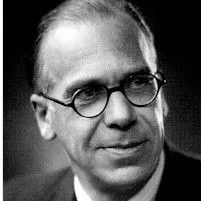
William Alwyn 威廉斯·艾尔文
威廉斯·艾尔文
W·Alwyn / W·艾尔文地區英国
類型个人
職業作曲、指挥
藝人資料
艾尔文生平 Biography
英国作曲家,指挥家,音乐教育家。出生于北安普顿。小时候学习短笛。15岁进入皇家音乐学院学习长笛与作曲。之后曾在伦敦交响乐团吹奏长笛,1926年起在皇家音乐学院任教。艾尔文长期在许多机构任职。1941-1962年为超过70部电影配乐。1985年在索思沃尔德去世。除了作曲家的身份,他同时还是一名语言专家、诗人与艺术家。他的“竖琴协奏曲 天使之歌”因为被花样滑冰选手关颖珊在1998年冬奥会上用作滑冰背景音乐而知名。
摘自:https://www.zhiyuezhe.com/composer/william_alwyn/
英文简介
British composer William Alwyn (November 7, 1905 - September 11, 1985), born William Alwyn Smith, is what baseball fans like to call a "pheenom". He not only wrote music, he wrote poetry, translated French poetry, and painted, all at a highly impressive level. And he played the flute professionally, joining the London Symphony Orchestra in his twenties. Furthermore, he was a bit of a prodigy. At the age of 15, he entered the Royal Academy of Music. At 21, he became a professor of composition at the very same place.
Alwyn composed at a fairly respectable pace. In the Forties and Fifties, he provided scores for films (Odd Man Out,The Winslow Boy,The Rocking Horse Winneramong many, many others) and incidental music for the BBC and for Disney (both films and television). This led him to dissatisfaction with everything he had written before 1940, and he rejected it in favor of a fresh start. As we have begun to find out through the efforts of the William Alwyn Society, it's a good thing he didn't actually destroy these early scores, some of which, like the Piano Concerto #1, are quite fine. Alwyn reacted to his self-assessed "woeful lack of technique" by concentrating on a Waltonian neo-classicism,à lathat composer's Sinfonia concertante, and counterpoint. By the late Forties, however, Alwyn felt sufficiently capable to allow neo-Romantic elements into his music. The Piano Concerto #2 (1960), for example, sings as passionately asSergei Rachmaninoff. With the patronage of the conductor John Barbirolli, Alwyn began a series of four symphonies (1949, 1953, 1956, 1959) – four different approaches to symphonic form conceived, according to the composer, at one go. One final symphony followed, the Fifth, subtitled"Hydriotaphia"and inspired by the prose of Sir Thomas Browne, in 1973.
The Fifties (notably the Symphony #3, the String Trio, and theDerby DayOverture) saw Alwyn's awakening interest in dodecaphony, although typically he approached the technique with the object of reconciling it with traditional tonality. This interest increased in the Sixties with works like his operaMiss Julie(1977), a work that draws from several currents of Modern music – neo-Romanticism, Impressionism, Bergian Expressionism, neoclassicism, and dodecaphony. An opera with great tunes and a drama dynamo (Alwyn furnished his own libretto), it had to wait twenty years for its first staging in 1997.
Alwyn retired from teaching and various organizational posts in the Sixties to devote himself to composition, writing, and painting. In 1962, he sold his fabulous collection of Pre-Raphaelite paintings, bought, of course, when that group was scorned. Alwyn, in a non-demonstrative way, kept a lively independence of mind. What with changes in postwar musical fashion, his scores were considered old-fashioned, although he always had high-profile champions and recording companies interested in his work. In the scarcity of live performances, I suspect most of us made our acquaintance with his music through recording. With the rise of the mainly retrospective outlook toward the Twentieth Century, especially neo-Romantics, Alwyn has reaped the benefits. Obscure parts of his catalogue, including his film music, are being explored, and at least three labels have issued a complete cycle of his symphonies.
摘自:http://www.classical.net/music/comp.lst/acc/alwyn.php