Vincent d'Indy 樊尚·丹第
樊尚·丹第
V·d'Indy / V·丹第地区法国
类型个人
职业作曲
艺人资料
法国作曲家,音乐教育家。出生于巴黎的一个贵族家庭。早年学习法律,早期作品得到过比才和马斯奈的肯定。后又在巴黎音乐学院随作曲家赛萨尔·弗兰克学习音乐。1876年去往拜罗伊特,欣赏到了尼伯龙根的指环的首演,从此成为了瓦格纳的崇拜者,丹第十分关注音乐教育,1894创办了巴黎圣乐学校,与巴黎音乐学院分庭抗礼。他教过的学生中有很多都是20世纪的重要作曲家。1931年丹第在巴黎去世。丹第的音乐风格深受瓦格纳、柏辽兹等人的影响,同时也积极从民歌当中吸取养分,在音乐评论家阿瑟·埃尔森看来,丹第的音乐风格选择了一条相对保守的道路。
Vincent d’Indy, in fullPaul-Marie-Théodore-Vincent d’Indy, (born March 27, 1851,Paris, France—died Dec. 1, 1931, Paris), French composer and teacher, remarkable for his attempted, and partially successful, reform of French symphonic and dramaticmusicalong lines indicated byCésar Franck.
D’Indy studied under Albert Lavignac, Antoine Marmontel, and Franck (for composition). In 1874 he was admitted to the organ class of the Paris Conservatoire, and in the same year his secondWallenstein Overturewas performed. He considered French 19th-century music and the tradition of theParis Opéra, of the Paris Conservatoire, and of French “decorative”symphonyto be superficial,frivolous, and unworthy to compete with the Teutonic Bach-Beethoven-Wagner tradition. The character of his own music revealedmeticulousconstruction but also a certain lyricism. His harmony and counterpoint were laboriously worked out, but in his later work, free and unorthodox rhythms came easily and fluidly.
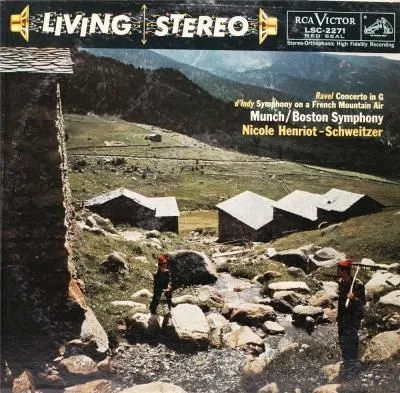
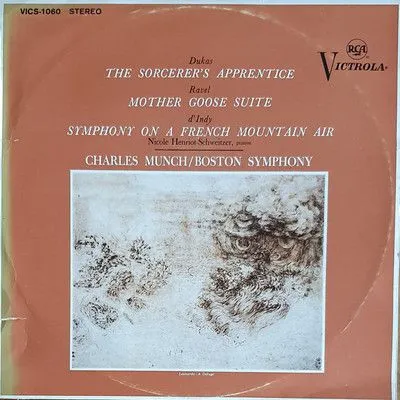
’Indy’s most important stage works wereLe Chant de le Cloche(1883; “The Song of the Clock”),Fervaal(1895),Le Légende de Saint Christophe(1915; “TheLegendof Saint Christopher”), andLe Rêve de Cinyras(1923; “The Dream of Cinyras”). Among his symphonic works,Symphonie sur un chant montagnardfrançais(1886; “Symphony on a French Mountaineer’s Chant”), with solo piano, based entirely on one of thefolksongs d’Indy had collected in the Ardeche district, andIstar(variations; 1896) represent his highest achievements. His 105 scores also include keyboard works,secularand religious choral writings, andchamber music. Among the latter are some of his best compositions:Quintette(1924); a suite for flute, string trio, and harp (1927); and theThird String Quartet(1928–29). He also made arrangements of the hundreds of folk songs that he collected in the Vivarais.
In 1894 d’Indy became one of the founders of theSchola Cantorumin Paris. It was through courses at this academy that he spread his theories and initiated the revival of interest in Gregorianplainchantand music of the 16th and 17th centuries. D’Indy also published studies of Franck (1906),Ludwig van Beethoven(1911), andRichard Wagner(1930). InFrance, Paul Dukas, Albert Roussel, and Déodat de Sévérac were among hisdisciples. Outside France, particularly in Greece, Bulgaria, Portugal, and Brazil, his influence was lasting upon composers interested in shapingfolk musicinto symphonic forms.