Vincent d'Indy 樊尚·丹第
樊尚·丹第
V·d'Indy / V·丹第地区法国
类型个人
职业作曲
艺人资料
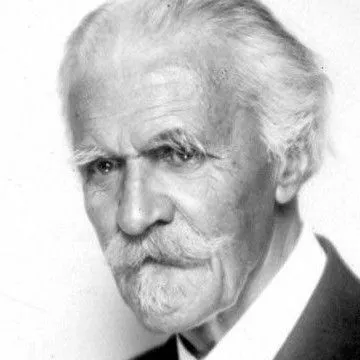
樊尚·丹第(法文:Paul Marie Théodore Vincent d'Indy,1851年3月27日-1931年12月2日),法国作曲家和音乐教师。1851年3月27日生于巴黎一个贵族家庭。先是学习法律,后来在巴黎音乐学院跟随弗朗克学对位、作曲与管风琴,他是弗朗克最优秀的学生,也是弗朗克美学精神的捍卫与继承者。两人共同组织学习和演奏包括巴赫的《圣马太福音书耶稣受难乐》在内的一系列作品,并开始倾心于瓦格纳的创作。丹第的创作富于细腻的感情和诗意,他一生共创作了4首交响曲,最受欢迎的的杰作是1886年为钢琴与乐队而作的《法国山歌交响曲》(或称《塞文山交响曲》)。丹第的其他作品,名气很大的是演奏时间也仅15分钟左右的乐队交响变奏曲《伊斯坦》。1896年,丹第同博尔德和吉尔芒联合创办巴黎的第二所高等音乐学校---巴黎圣歌学校。丹第领导这所学校先后达三十多年之久。他教过的学生中有很多都是20世纪的重要作曲家。[1]1931年丹第在巴黎病逝。
Vincent d'Indy(French:[vɛ̃sɑ̃ dɛ̃di]; 27 March 1851– 2 December 1931) was a French composer and teacher.
Paul Marie Théodore Vincent d'Indy was born in Paris into an aristocratic family of royalist and Catholic persuasion. He had piano lessons from an early age from his paternal grandmother, who passed him on to Antoine François Marmontel and Louis Diémer. From the age of 14 he studied harmony with Albert Lavignac. At age 19, during the Franco-Prussian War, he enlisted in the National Guard, but returned to musical life as soon as the hostilities were over. The first of his works he heard performed was a Symphonie italienne, at an orchestral rehearsal under Jules Pasdeloup; the work was admired by Georges Bizet and Jules Massenet, with whom he had already become acquainted. On the advice of Henri Duparc, he became a devoted student of César Franck at the Conservatoire de Paris. As a follower of Franck, d'Indy came to admire what he considered the standards of German symphonism.
In the summer of 1873 he visited Germany, where he met Franz Liszt and Johannes Brahms. On 25 January 1874 his overture Les Piccolomini was performed at a Pasdeloup concert, sandwiched between works by Bach and Beethoven. Around this time he married Isabelle de Pampelonne, one of his cousins. In 1875 his symphony dedicated to János Hunyadi was performed. That same year he played a minor role – the prompter – at the premiere of Bizet's opera Carmen. In 1876 he was present at the first production of Richard Wagner's Ring Cycle at Bayreuth. This made a great impression on him and he became a fervent Wagnerite. In 1878 d'Indy's symphonic ballad La Forêt enchantée was performed. In 1882 he heard Wagner's Parsifal. In 1883 his choral work Le Chant de la clocheappeared. In 1884 his symphonic poem Saugefleurie was premiered. His piano suite ("symphonic poem for piano") called Poème des montagnes came from around this time. In 1887 appeared his Suite in D for trumpet, 2 flutes and string quartet. That same year he was involved in Lamoureux's production of Wagner's Lohengrin as choirmaster. His music drama Fervaal occupied him between 1889 and 1895.
Inspired by his own studies with Franck and dissatisfied with the standard of teaching at the Conservatoire de Paris, d'Indy, together with Charles Bordes and Alexandre Guilmant, founded the Schola Cantorum de Paris in 1894. D'Indy taught there and later at the Paris Conservatoire until his death. Among his many students were Isaac Albéniz, Leo Arnaud, Joseph Canteloube (who later wrote d'Indy's biography), Pierre Capdevielle, Jean Daetwyler, Arthur Honegger, Eugène Lapierre, Leevi Madetoja, Albéric Magnard, Rodolphe Mathieu, Darius Milhaud, Helena Munktell, Cole Porter, Albert Roussel, Erik Satie, Georges-Émile Tanguay, Otto Albert Tichý, Emiliana de Zubeldia and Xian Xinghai, Ahmet Adnan Saygun. Xian was one of the earliest Chinese composers of western classical music See: List of music students by teacher: C to F#Vincent d'Indy. While A. A. Saygun became one of the pioneers of classical music in Turkey.
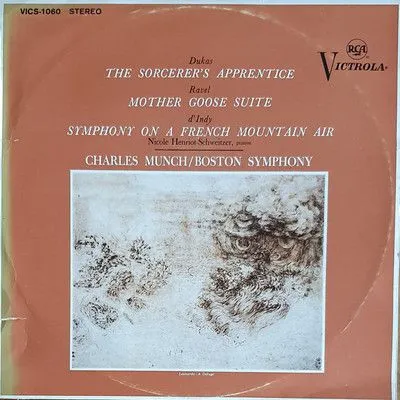
Few of d'Indy's works are performed regularly today. His best known pieces are probably the Symphony on a French Mountain Air (Symphonie sur un chant montagnard français, also known as Symphonie cévenole) for piano and orchestra (1886), and Istar (1896), a symphonic poem in the form of a set of variations in which the theme appears only at the end.
Among d'Indy's other works are other orchestral music (including a Symphony in B♭, a vast symphonic poem, Jour d'été à la montagne, and another, Souvenirs, written on the death of his first wife; he later remarried), chamber music, including two of the most highly regarded string quartets of the latter nineteenth century (No. 2 in E major, Op. 45, and No. 3 in D-flat, Op. 96), piano music (including a Sonata in E minor), songs and a number of operas, including Fervaal (1897) and L'Étranger (1902). His music drama Le Légende de Saint Christophe, based on themes from Gregorian chant, was performed for the first, and possibly last, time, on 6 June 1920. His comédie musicale had its premiere in paris on 10 June 1927. His Lied for cello and orchestra, Op. 19, was recorded by Julian Lloyd Webber and the English Chamber Orchestra conducted by Yan Pascal Tortelier in 1991. As well as Franck, d'Indy's works show the influence of Berlioz and especially of Wagner.
D'Indy helped revive a number of then largely forgotten early works, for example, making his own edition of Claudio Monteverdi's opera L'incoronazione di Poppea.
His musical writings include the co-written three-volume Cours de composition musicale (1903–1905), as well as studies of Franck and Beethoven.
D'Indy died where he was born, in Paris.
D'Indy was a committed monarchist, joining the League of the French Fatherland during the Dreyfus affair. He was anti-Semitic but did not extend that bias to his Jewish colleagues.