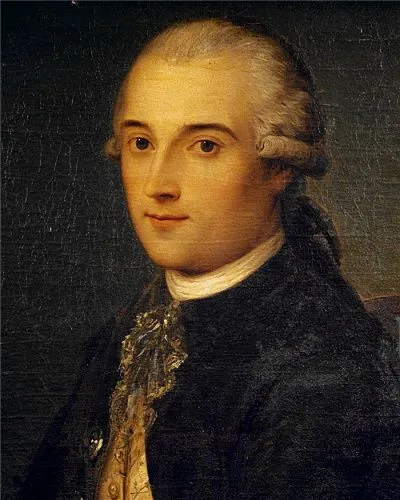
Francesco Feo 弗朗切斯科·费欧
弗朗切斯科·费欧
Feo / F. / F..Feo / 费欧地区意大利
类型个人
职业作曲
艺人资料
中文简介
意大利作曲家。出生于那不勒斯。早年在那不勒斯学习音乐,与莱奥、马约、约梅利等人相识。1713年他创作的第1部歌剧公演。随着他一系列歌剧以及宗教作品的上演,他开始建立起自己的声誉。后他又成为了圣奥诺夫廖的一名有名的音乐教师,培养了许多知名作曲家。1739年他接任杜兰特成为那不勒斯耶稣学院的院长。1743年学院关闭,费欧因此退休。但是他继续从事作曲。1761年他在那不勒斯去世。
菲奥作为那不勒斯乐派的代表作曲家之一,主要以歌剧和宗教音乐著称,但他的作品跟很多那不勒斯乐派作曲家一样,在现代知名度已经大降。
曾长期在那不勒斯皇家小教堂担任乐长的作曲家朱塞佩·德·马约娶了菲奥的侄女,菲奥也当过自己的侄孙——朱塞佩之子、那不勒斯乐派后期名家吉安·弗朗切斯科·德·马约——的老师。
英文简介
一、Biography
Francesco Feo(1691 – 28 January 1761) was an Italian composer, known chiefly for his operas. He was born and died in Naples, where most of his operas were premièred.
二、Life
Feo studied music at theConservatorio di Santa Maria della Pietàin Naples, starting on 3 September 1704. Among the other composers he met there were Leonardo Leo, Giuseppe de Majo (who would later marry his niece), and Niccolò Jommelli. His first teacher was Andrea Basso, and after 1705 Nicola Fago, who had only just been appointed. Feo remained at the conservatory until some time around 1712.
In 1713 he presented his first opera,L’amor tirannico, ossia Zenobia(Tyrannical Love, or Zenobia), and for carnival 1714Il martirio di Santa Caterina(The Martyrdom of Saint Catherine of Egypt), an oratorio. His fame began to increase with sacred works for local churches, such as hisMissa defunctorum(Requiem Mass) in 1718, and with his recitatives, arias and comic scenes for performances of operas by other composers when they were staged in Naples. In 1719 Feo wroteLa forza della virtù(The Power of Virtue), and then hisopera seriaTeuzzonein 1720. Real fame only came with his opera seriaSiface, re di Numidia(Syphax, King of Numidia), for theTeatro San Bartolomeoin 1723. The libretto was the first attempt atdramma per musicaby the 25-year-old Pietro Metastasio, who had just arrived in Naples.
With his increasing popularity, Feo was appointed as a teacher in theConservatorio di Sant'Onofrio a Porta Capuana, where he worked alongside Gabriele Prota and took over from Nicola Grillo. In the next sixteen years he became known as one of the most important teachers in Naples. Among his students at Sant'Onofrio were Nicola Sabatino, Nicolò Jommelli, Matteo Capranica, and Gennaro Manna. In 1739 he left Sant'Onofrio to teach at theConservatorio dei Poveri di Gesù Cristo, to replace Francesco Durante who had just retired. Feo would stay there until 1743, helped by Alfonso Caggi and later Girolamo Abos. During his time there, he taught Giacomo Insanguine and Gian Francesco de Majo.
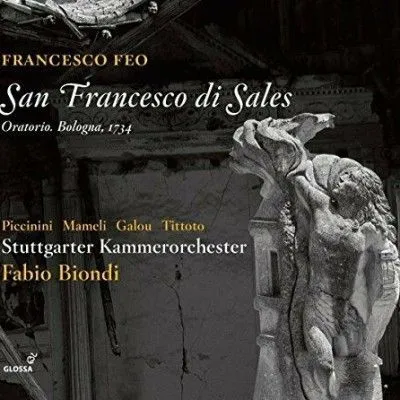
Feo wrote most of his oratorios between 1723 and 1743, along with a good portion of his cantatas and much other sacred music. His best-known oratorio wasSan Francesco Salesio, Apostolo del Chablais (Saint Francis de Sales, the Apostle of Chablais, 1734), which would be performed many times in the next twenty years or so throughout Italy. For Rome and Turin he wrote another sixopere serieand severalintermezzi.Just as his friend Giovanni Battista Pergolesi was commissioned in 1734-35 by theCavalieri della Vergine dei Dolorito write a new Stabat Mater to replace the now unfashionable one written by Alessandro Scarlatti, so Feo was commissioned to replace Scarlatti's St. John Passion. Feo composed the serenateOresteandPolinicefor Madrid in 1738, and for the Fathers of the Holy Cross in Prague he wrote the oratorioLa distruzione dell’esercito dei Cananei con la morte di Sisara(The Destruction of the Canaanite Army and the Death of Sisara, 1739). His last opera,Arsace, was performed in Turin for the reopening of the Teatro Regio in 1740. His last oratorio,Ruth, was performed at Rome in 1743.
In 1743, the Poveri di Gesù Cristo was abolished and converted into a seminary. Feo retired from teaching, but continued to compose sacred music for Neapolitan churches, including the Santissima Annunziata Maggiore, where he becamemaestro di cappellain 1726. His last autograph composition is aQuoniam tu solus sanctus(For Thou alone art holy), 1760, for tenor and strings.
摘自:https://www.sin80.com/artist/feo