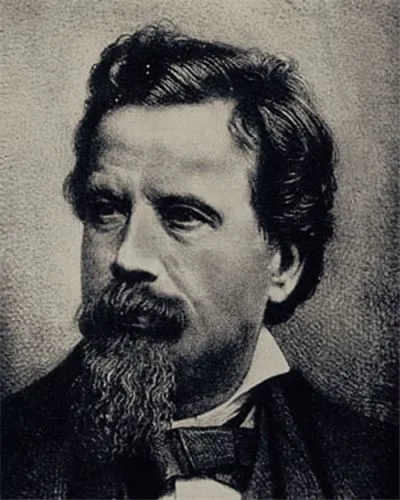
Amilcare Ponchielli 阿米尔卡来·蓬基耶利
阿米尔卡来·蓬基耶利
A·Ponchielli / A·蓬基耶利地区意大利
类型个人
职业作曲
艺人资料
阿米尔卡雷·蓬基耶利(Amilcare Ponchielli,1834—1886年),意大利作曲家.主要作品有《拉焦孔达》、《阿尔古娜》等。意大利作曲家。出生于帕代诺法索拉罗,父亲是教堂的管风琴师。童年起随父亲学习音乐。1843-1854年在米兰音乐学院免费学习。毕业后曾在克雷莫纳任教堂管风琴师和教堂乐长。1861年任皮亚琴察市吹奏乐队指挥。1883年起在米兰音乐学院教授作曲。此外他还在贝加莫大教堂任合唱指挥并写作宗教音乐。他的第一部成名作品是根据曼佐尼的同名小说写的歌剧“约婚”,之后连续写了多歌剧和舞剧,都获得成功。其中使他获得国际声誉和至今仍在演出的是他的歌剧代表作“拉焦孔达”。这部歌剧富于戏剧性,剧中的“时辰之舞”至今仍是音乐会上常演的曲目。庞契耶利是意大利近代歌剧运动的先行者,他的歌剧在不影响人声与主导地位的情况下,充分发挥了管弦乐的表现力。
Amilcare Ponchielli(Italian:[aˈmilkare poŋˈkjɛlli], 31 August 1834 – 16 January 1886) was an Italian opera composer, best known for his operaLa Gioconda. He was married to the sopranoTeresina Brambilla.
Born in Paderno Fasolaro (now Paderno Ponchielli) near Cremona, then Kingdom of Lombardy-Venetia, Ponchielli won a scholarship at the age of nine to study music at the Milan Conservatory, writing his first symphony by the time he was ten years old.
Two years after leaving the conservatory he wrote his first opera—it was based on Alessandro Manzoni's great novel The Betrothed (I promessi sposi) -- and it was as an opera composer that he eventually found fame.
His early career was disappointing. Maneuvered out of a professorship at the Milan Conservatory that he had won in a competition, he took small-time jobs in small cities, and composed several operas, none successful at first. In spite of his disappointment, he gained much experience as the bandmaster (capobanda) in Piacenza and Cremona, arranging and composing over 200 works for wind band. Notable among his "original" compositions for band are the first-ever concerto for euphonium (Concerto per Flicornobasso, 1872), fifteen variations on the popular Parisian song "Carnevale di Venezia", and a series of festive and funeral marches that resound with the pride of the newly unified Italy and the private grief of his fellow Cremonese. The turning point was the big success of the revised version of I promessi sposi in 1872, which brought him a contract with the music publisher G. Ricordi & Co. and the musical establishment at the Conservatory and at La Scala. The role of Lina in the revised version was sung by Teresina Brambilla whom he married in 1874. Their son Annibale became a music critic and minor composer. The ballet Le due gemelle (1873) confirmed his success.
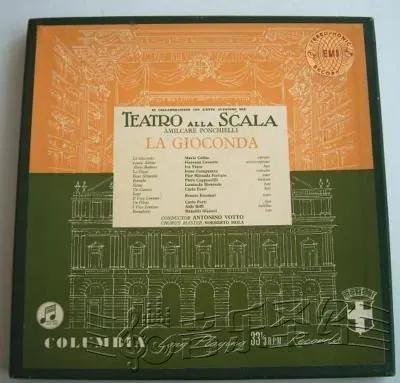
The following opera, I Lituani (The Lithuanians) of 1874, was also well received, being performed later at Saint Petersburg (as Aldona on 20 November 1884). His most well-known opera is La Gioconda (1876), which his librettist Arrigo Boito adapted from the same play by Victor Hugo that had been previously set by Saverio Mercadante as Il giuramento in 1837 and Carlos Gomes as Fosca in 1873. It was first produced in 1876 and revised several times. The version that has become popular today was first given in 1880.
In 1876 he started working on I Mori di Valenza, although the project dates back to 1873. It was an opera that he never finished, although it was completed later by Arturo Cadore and performed posthumously in 1914.
After La Gioconda, Ponchielli wrote the monumental biblical melodrama in four acts Il figliuol prodigo given in Milan at La Scala on 26 December 1880 and Marion Delorme, from another play by Victor Hugo, which was presented at La Scala on 17 March 1885. In spite of their rich musical invention, neither of these operas met with the same success but both exerted great influence on the composers of the rising generation, such as Giacomo Puccini, Pietro Mascagni and Umberto Giordano.
In 1881, Ponchielli was appointed maestro di cappella of the Bergamo Cathedral, and from the same year he was a professor of composition at the Milan Conservatory, where among his students were Puccini, Mascagni and Emilio Pizzi.
He died of pneumonia in Milan in 1886 and was interred in the city's Monumental Cemetery.
From:https://en.wikipedia.org/wiki/'>https://en.wikipedia.org/wiki/Amilcare Ponchielli