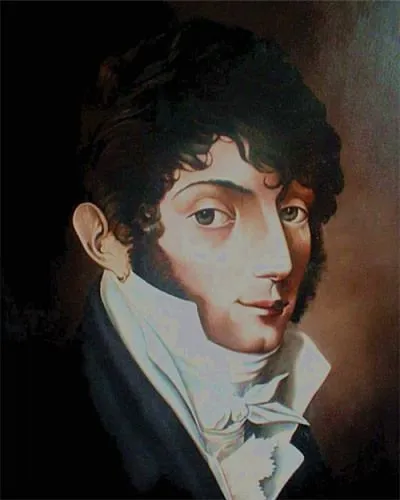
莫罗·朱利亚尼 Mauro Giuliani
莫罗·朱利亚尼
M·Giuliani / M·朱利亚尼RegionItaly
TypeSolo
ProfessionComposer
Artist Profile
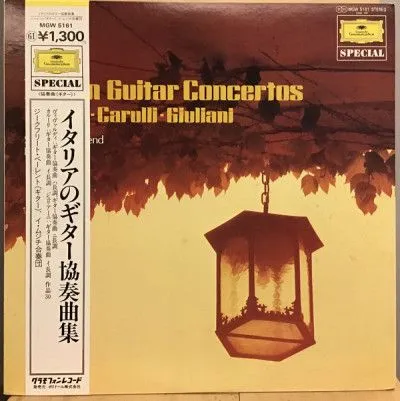
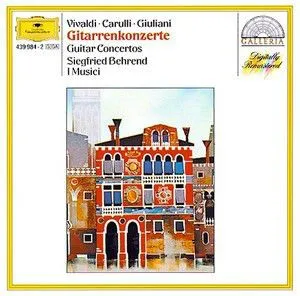
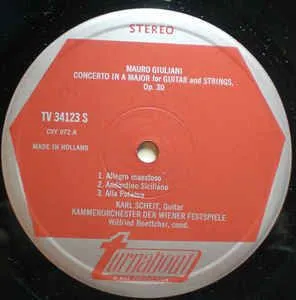
莫罗·朱利亚尼(Mauro Giuliani,1781~1829)被誉为是永远活着的最伟大的吉他音乐家。他早年在意大利接受吉他训练,1806年动身前往维也纳。在维也纳,朱利亚尼惊人的才华引起了人们对于吉他的热情和追逐。1808年,朱利亚尼的“大协奏曲”(op.30)在维也纳首演,这次首演在音乐史上是一次划时代事件 ,它是世界上首部吉他协奏曲。此后,吉他在维也纳迅速风行,朱利亚尼声望也与日俱增,直至今日,他对古典吉他的影响仍处处可见。而后朱利亚尼还继续创作了两部吉他协奏曲(op.36&op.70),以及大量吉他室内乐和独奏作品。
意大利作曲家,吉他演奏家,大提琴演奏家。出生于比谢列。童年全家移居巴列塔。一开始学习的是大提琴,之后开始学习吉他并很快成为了演奏吉他的能手。1806年在完成了吉他以及对位法的学习后他离开意大利前往维也纳,并开始以吉他演奏家的身份巡回欧洲演出。他的演出获得了很大的成功,他成了一个明星般的人物。1829年在那不勒斯去世。朱利安尼推动了吉他音乐的发展使之在音乐会与音乐艺术中占据了一席之地,他的代表作是各类吉他变奏曲。
Mauro Giuseppe Sergio Pantaleo Giuliani (27 July 1781 – 8 May 1829) was an Italian guitarist, cellist, singer, and composer. He was a leading guitar virtuoso of the early 19th century.
Although born in Bisceglie, Giuliani's center of study was in Barletta where he moved with his brother Nicola in the first years of his life. His first instrumental training was on the cello—an instrument which he never completely abandoned—and he probably also studied the violin. Subsequently, he devoted himself to the guitar, becoming a very skilled performer on it in a short time. The names of his teachers are unknown, and we cannot be sure of his exact movements in Italy.
He married Maria Giuseppe del Monaco, and they had a child, Michael, born in Barletta in 1801. After that he was probably in Bologna and Trieste for a brief stay; by the summer of 1806, fresh from his studies of counterpoint, cello and guitar in Italy, he had moved to Vienna without his family. Here he began a relationship with the Viennese Anna Wiesenberger (1784–1817), with whom he had four daughters, Maria Willmuth (born 1808), Aloisia Willmuth (born 1810), Emilia Giuliani (born 1813) and Karolina Giuliani (born 1817).
In Vienna he became acquainted with the classical instrumental style. In 1807 Giuliani began to publish compositions in the classical style. His concert tours took him all over Europe. Everywhere he went he was acclaimed for his virtuosity and musical taste. He achieved great success and became a musical celebrity, equal to the best of the many instrumentalists and composers who were active in the Austrian capital city at the beginning of the 19th century.
Giuliani defined a new role for the guitar in the context of European music. He was acquainted with the highest figures of Austrian society and with notable composers such as Rossini and Beethoven, and cooperated with the best active concert musicians in Vienna. In 1815 he appeared with Johann Nepomuk Hummel (followed later by Ignaz Moscheles), the violinist Joseph Mayseder and the cellist Joseph Merk, in a series of chamber concerts in the botanical gardens of Schönbrunn Palace, concerts that were called the "Dukaten Concerte", after the price of the ticket, which was a ducat. This exposure gave Giuliani prominence in the musical environment of the city. Also in 1815, he was the official concert artist for the celebrations of the Congress in Vienna. Two years earlier, on 8 December 1813, he had played (probably cello) in an orchestra for the first performance of Beethoven's Seventh Symphony.
In Vienna, Giuliani had minor success as a composer. He worked mostly with the publisher Artaria, who published many of his works for guitar, but he had dealings with all the other local publishers, who spread his compositions all over Europe. He developed a teaching career here as well; among his numerous students were Bobrowicz and Horetzky.
In 1819 Giuliani left Vienna, mainly for financial reasons: he expected to make financial profit on a concert tour through Bohemia and Bavaria. He returned to Italy, spending time in Trieste and Venice, and finally settled in Rome. In 1822 he brought his illegitimate daughter Emilia to Italy, who had been born in Vienna in 1813. She was educated at the nunnery L'adorazione del Gesù from 1821 to 1826, together with Giuliani's first illegitimate daughter Maria Willmuth. In Rome he did not have much success; he published a few compositions and gave only one concert.
In July 1823 he began a series of frequent trips to Naples to be with his father, who was seriously ill. In the Bourbon city of Naples Giuliani would find a better reception to his guitar artistry, and there he was able to publish other works for guitar with local publishers.
In 1826 he performed in Portici before Francesco I and the Bourbon court. In this time, which we could call Giuliani's Neapolitan period, he appeared frequently in duo concert with his daughter Emilia, who had become a skilled performer on the guitar. Toward the end of 1827 the health of the musician began to fail; he died in Naples on 8 May 1829. The news of his death created a great stir in the Neapolitan musical environment.
As a guitar composer he was very fond of the theme and variations— an extremely popular form in Vienna. He had a remarkable ability to weave a melody into a passage with musical effect while remaining true to the idiom of the instrument.
Giuliani's achievements as a composer were numerous. Giuliani's 150 compositions for guitar with opus number constitute the nucleus of the nineteenth-century guitar repertory. He composed extremely challenging pieces for solo guitar as well as works for orchestra and Guitar-Violin and Guitar-Flute duos.
Outstanding pieces by Giuliani include his three guitar concertos (op. 30, 36 and 70); a series of six fantasias for guitar solo, op. 119-124, based on airs from Rossini operas and entitled the "Rossiniane"; several sonatas for violin and guitar and flute and guitar; a quintet, op. 65, for strings and guitar; some collections for voice and guitar, and a Grand Overture written in the Italian style. He also transcribed many symphonic works, both for solo guitar and guitar duo. One such transcription arranges the overture to The Barber of Seville by Rossini, for two guitars. There are further numerous didactic works, among which is a method for guitar that is used frequently by teachers to this day.
Today, Giuliani's concertos and solo pieces are performed by professionals and still demonstrate the ability of the guitarist to play the piece, as well as Giuliani's natural ability as a composer for the classical guitar.
Giuliani arranged many 19th century opera themes for the guitar, e.g. from the opera Semiramide by Gioachino Rossini. His work Le Rossiniane also includes numerous themes from the operas of Rossini.
The "Introduction" from Rossiniana No. 2 has become well known in popular culture due to its inclusion in the Counter Strike Italy map.
From:https://en.wikipedia.org/wiki/'>https://en.wikipedia.org/wiki/Mauro Giuliani