Friedrich Von Flotow 弗里德里希·冯·弗洛托
弗里德里希·冯·弗洛托
F·V·Flotow / F·V·弗洛托地區德国
類型个人
職業作曲
藝人資料
德国作曲家。出生于梅克伦堡的一个贵族家庭。1827年赴巴黎音乐学院师从雷哈,受到梅耶贝尔、罗西尼、阿莱维、奥柏等作曲家的影响,立志于歌剧创作。1844年写出成名作“亚历山德罗·斯特拉代拉”。后曾到什未林任职,晚年居住在维也纳。1883年在达姆施塔特去世。他的作品风格比较轻快,由于其学习经历受法国音乐的影响较大。目前他的歌剧中经常上演的只有一部“玛尔塔”。
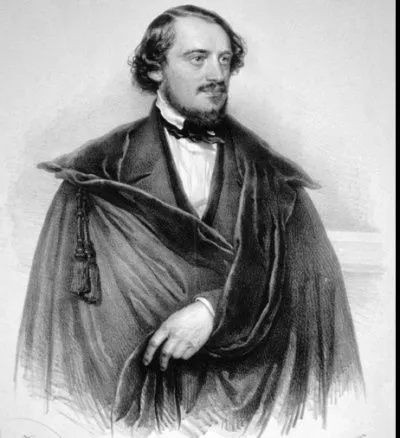
Friedrich Adolf Ferdinand, Freiherr von Flotow(27 April 1812 – 24 January 1883) was a German composer. He is chiefly remembered for his operaMartha, which was popular in the 19th century and the early part of the 20th.
Born in Teutendorf, in Mecklenburg, into an aristocratic family, Flotow was French-trained. He studied at the Conservatoire de Paris and during this time came under the influence of Auber, Rossini, Meyerbeer, Donizetti, Halévy, and later Gounod and Offenbach. These influences are reflected in his operas, where a distinctive French opéra comique flavour exists.
He completed his first opera in 1835, Pierre et Cathérine, but his breakthrough came with Le naufrage de la Méduse (1839), based on the wreck of the warship Méduse. The three-act romantic opera Alessandro Stradella of 1844 is recognized as one of Flotow's finer works. Martha was first staged in Vienna at the Theater am Kärntnertor on 25 November 1847, and soon became one of the best-loved of all operas.
Between 1856 and 1863 Flotow served as Intendant of the court theatre at Schwerin. For most of his last years he lived in either Paris or Vienna, and he had the satisfaction of seeing his operas mounted as far away as Saint Petersburg and Turin. He died in Darmstadt.
In all, Flotow wrote about 30 operas. Many of these works were performed in different versions and under different titles, in German, French and sometimes other languages. Some survive, some are lost. All but Martha have fallen into obscurity, and even Martha is not nearly as often performed now as it was a century ago, though it is still sometimes staged, and though there have been a number of attempts to revive other Flotow works (including Alessandro Stradella) during recent years.
The best-known single piece by Flotow is probably "Ach! so fromm, ach! so traut". This was added to Martha eighteen years after the Vienna premiere, and had been originally written for a different Flotow opera of 1846. It has been much recorded in its Italian version, "M’apparì tutt’amor".