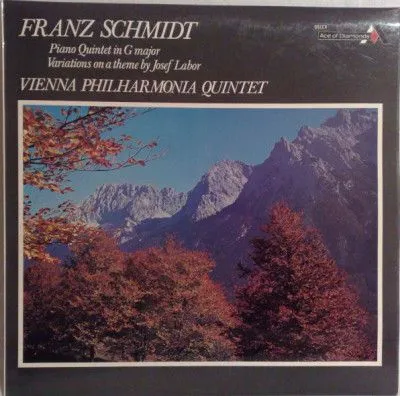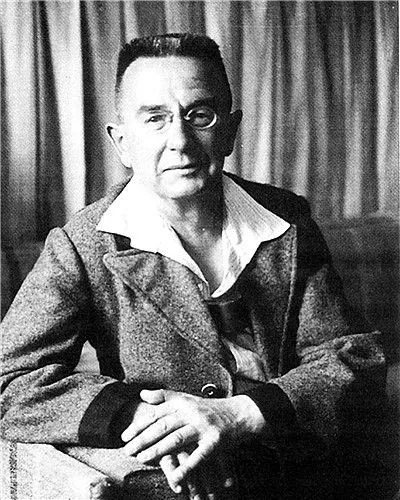
Franz Schmidt 弗朗兹·施密特
弗朗兹·施密特
F·Schmidt / F·施密特地區奥地利
類型个人
職業作曲、钢琴、大提琴
藝人資料
奥地利作曲家,钢琴家,大提琴家。生于普雷斯堡(今斯洛伐克首都布拉迪斯拉发),早年入维也纳音乐学院学习,后在维也纳宫廷歌剧院乐团任大提琴手。1914年入维也纳音乐学院任教,1927-1931年任校长。他还是一流的钢琴家,利奥波德·戈多夫斯基曾称施密特和他自己是同时代最好的两位钢琴家。晚年施密特加入纳粹,成为了他人生的污点。不过据熟悉了解他的人说,施密特只是专注于作曲,对于政治上的立场与动机其实十分单纯:他为人和善,生前有许多犹太人朋友,而纳粹交给他的政治任务,一首宣传纳粹的康塔塔也不知有意无意地最终未能完成。施密特崇拜并研究自己的老师布鲁克纳,其作品也颇有布鲁克纳的味道,善于运用对位法。所作四部交响曲被认为是德奥交响曲传统的终结。
Franz Schmidt(22 December 1874– 11 February 1939) was anAustriancomposer, cellist and pianist.
Schmidt was born in Pozsony (known in German as Pressburg), in the Hungarian part of the Austro-Hungarian Empire (the city is now Bratislava, capital of Slovakia). His father was half Hungarian and his mother entirely Hungarian. He was a Roman Catholic.
His earliest teacher was his mother, Mária Ravasz, an accomplished pianist, who gave him a systematic instruction in the keyboard works of J. S. Bach. He received a thorough foundation in theory from Brother Felizian Moczik, the outstanding organist at the Franciscan church in Pressburg. He studied piano briefly with Theodor Leschetizky, with whom he clashed. He moved to Vienna with his family in 1888, and studied at the Vienna Conservatory(composition with Robert Fuchs, cello with Ferdinand Hellmesberger and theory (the counterpoint class) with Anton Bruckner), graduating "with excellence" in 1896.
He beat 13 other applicants and obtained a post as cellist with the Vienna Court Opera Orchestra, where he played until 1914, often under Gustav Mahler. Mahler habitually had Schmidt play all the cello solos, even though Friedrich Buxbaum was the principal cellist. Schmidt was also in demand as a chamber musician. Schmidt and Arnold Schoenberg maintained cordial relations despite their vast differences in style. Also a brilliant pianist, in 1914 Schmidt took up a professorship in piano at the Vienna Conservatory, which had been recently renamed Imperial Academy of Music and the Performing Arts. (Apparently, when asked who the greatest living pianist was, Leopold Godowsky replied, "The other one is Franz Schmidt.") In 1925 he became Director of the Academy, and from 1927 to 1931 its Rector.
As teacher of piano, cello and counterpoint and composition at the Academy, Schmidt trained numerous musicians, conductors and composers who later achieved fame. Among his best-known students were the pianist Friedrich Wührer and Alfred Rosé (son of Arnold Rosé, the legendary founder of the Rosé Quartet, Konzertmeister of the Vienna Philharmonic and brother-in-law of Gustav Mahler). Among the composers were Theodor Berger, Marcel Rubin and Alfred Uhl. He received many tokens of the high esteem in which he was held, notably the Franz-Josef Order, and an Honorary Doctorate from the University of Vienna.
Schmidt's private life was in stark contrast to the success of his distinguished professional career, and was overshadowed by tragedy. His first wife Karoline Perssin (c1880-1943) was confined in the Vienna mental hospital Am Steinhof in 1919, and three years after his death was murdered under the Nazi euthanasia program. Their daughter Emma Schmidt Holzschuh (1902-1932, married 1929) died unexpectedly after the birth of her first child. Schmidt experienced a spiritual and physical breakdown after this, achieved an artistic revival and resolution in his Fourth Symphony of 1933 (which he inscribed as "Requiem for my Daughter") and, especially, in his oratorio The Book With Seven Seals. His second marriage in 1923, to a successful young piano student Margarethe Jirasek (1891-1964), for the first time brought some desperately needed stability into the private life of the artist, who was plagued by many serious health problems.
Schmidt's worsening health forced his retirement from the Academy in early 1937. In the last year of his life Austria was brought into the German Reichby the Anschluss, and Schmidt was fêted by the Nazi authorities as the greatest living composer of the so-called Ostmark. He was given a commission to write a cantata entitled "The German Resurrection", which, after 1945, was taken by many as a reason to brand him as having been tainted by Nazi sympathy. However, Schmidt left this composition unfinished, and in the summer and autumn of 1938, a few months before his death, set it aside to devote himself to two other commissioned works for the one-armed pianist Paul Wittgenstein, for whom he had often composed: the Quintet in A major for Piano left-hand, Clarinet, and String Trio; and the solo Toccata in D minor. Schmidt died on 11 February 1939.
From:https://en.wikipedia.org/wiki/Franz Schmidt