格蕾斯·班布丽 Grace Bumbry
格蕾斯·班布丽
G·Bumbry / G·班布丽TypeSolo
ProfessionMEZZO
Artist Profile
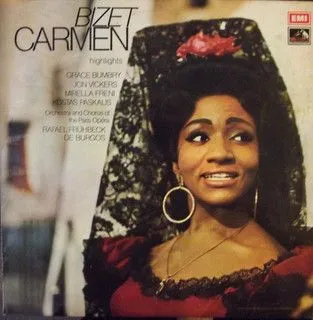
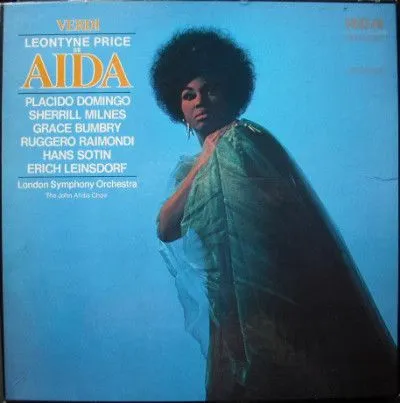
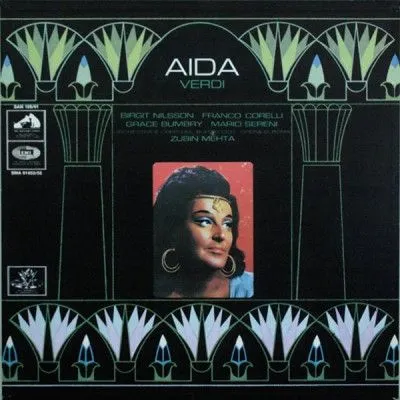
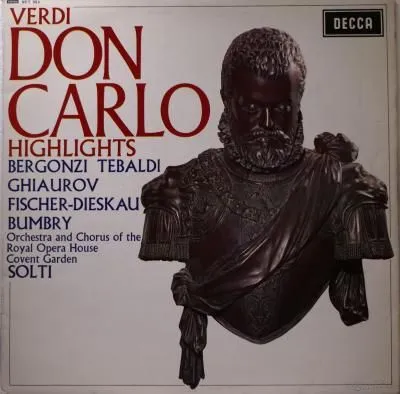
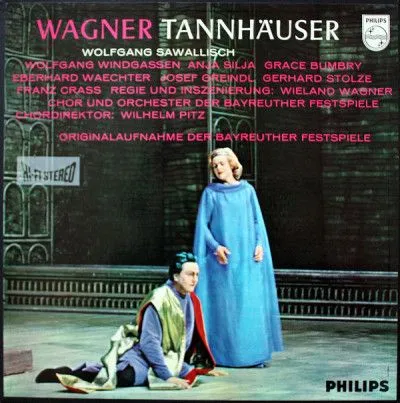
Grace Bumbry (born January 4, 1937), an American opera singer, is considered one of the leadingmezzo-sopranos of her generation, as well as a major soprano for many years. She was a member of a pioneering generation of singers who followed Marian Anderson (including Leontyne Price, Martina Arroyo,Shirley Verrett and Reri Grist) in the world of classical music and paved the way for future African-American opera and classical singers. Bumbry's voice was rich and sizable, possessing a wide range, and was capable of producing a very distinctive plangent tone. In her prime, she also possessed good agility and bel canto technique (see for example her renditions of the 'Veil Song' from Verdi's Don Carlo in the 1970s and 1980s, as well as her Ernani from the Lyric Opera of Chicago in 1984). She was particularly noted for her fiery temperament and dramatic intensity on stage. More recently, she has also become known as a recitalist and interpreter of lieder, and as a teacher. From the late 1980s on, she concentrated her career in Europe, rather than in the US. A long-time resident of Switzerland, she now makes her home in Salzburg, Austria. From mezzo to soprano to mezzo Bumbry's career in the world of opera was a remarkable and long one, if somewhat controversial. Initially, Bumbry began her career as a mezzo-soprano, but later expanded her repertoire to include many dramatic soprano roles. In the mid-1970s and 1980s she considered herself a soprano; but in the 1990s, as her career approached its twilight, she often returned to mezzo roles. She was one of the more successful singers who have made the transition from mezzo-soprano to high soprano (along with her compatriot and contemporary Shirley Verrett); however, audiences and critics were divided over whether she was a "true" soprano. Nonetheless, she sang major soprano roles at most major opera houses around the world up until the end of her operatic career in the 1990s—singing Turandot at the Royal Opera House at Covent Garden (London) in 1993, for example. Her operatic career spanned from 1960 (her debut in Paris as Amneris) to 1997 (as Klytämnestra, in Lyon, France). Early life and career Grace Bumbry was born in St Louis, Missouri, to a family of modest means. In a BBC radio interview she recalled that her father was a railroadporter and her mother a school teacher. She graduated from the prestigious Charles Sumner High School, the first black high school west of theMississippi. She first won a local radio competition at age 17, singing Verdi's demanding aria "O don fatale" (from Don Carlo). One of the prizes for first place was a scholarship to the local music conservatory; however, as the institution was segregated, it would not accept a black student. Embarrassed, the contest promoters arranged for her to study at Boston University College of Fine Arts (1955) instead. She later transferred toNorthwestern University, where she met the German dramatic soprano and noted Wagnerian singer Lotte Lehmann, with whom she later studied at theMusic Academy of the West in Santa Barbara, California, and who became her mentor in her early career. She also studied with renowned teachersMarinka Gurewich and Armand Tokatyan. In 1958, she was a joint winner of the Metropolitan Opera National Council Auditions with soprano Martina Arroyo; later that year, she made her recital debut in Paris. Bumbry made her operatic debut in 1960 when she sang Amneris at the Paris Opéra; that same year she joined the Basel Opera. She gained international renown when she was cast by Wieland Wagner (Richard Wagner's grandson) as Venus at Bayreuth in 1961, at age 24, the first black singer to appear there, which earned her the title "Black Venus". The cast also included Victoria de los Angeles as Elisabeth and Wolfgang Windgassen as Tannhäuser. Conservative opera-goers were outraged at the idea, but Bumbry's performance was so moving that by the end of the opera she had won the audience over and they applauded for 30 minutes, necessitating 42 curtain calls. The ensuing furor in the media made Bumbry an international cause célèbre. She was subsequently invited by Jacqueline Kennedy to sing at the White House. (She returned to the White House in 1981, singing at the Ronald Reagan inauguration.) Having begun her operatic career on such a high note, she achieved the rare feat of never falling back on small or comprimario roles. Bumbry made her Royal Opera House, Covent Garden debut in 1963; her La Scala debut in 1964; and her Metropolitan Opera debut as Princess Eboli in Verdi's Don Carlo in 1965. In 1964, Bumbry appeared for the first time as a soprano, singing Verdi's Lady Macbeth in her debut at the Vienna State Opera. In 1966 she appeared as Carmen opposite Jon Vickers's Don José in two different lauded productions, one with conductor Herbert von Karajan inSalzburg and the other for Bumbry's debut with the San Francisco Opera. In 1967 she sang Carmen again in her debut with the Philadelphia Lyric Opera Company and returned to the San Francisco Opera in 1967 for her first performance of Laura Adorno in La Gioconda with Leyla Gencer as Gioconda,Renato Cioni as Enzo Grimaldi, Maureen Forrester as La Cieca and Chester Ludgin as Barnaba. In 1963, she married the Polish-born tenor Erwin Jaeckel. They divorced in 1972. <a href="<a href=" https:="" en.wikipedia.org="" wiki="" grace_bumbry'="">https://en.wikipedia.org/wiki/Grace_Bumbry'>https://en.wikipedia.org/wiki/Grace_Bumbry