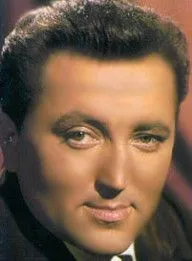
弗里茨·翁德里希 Fritz Wunderlich
弗里茨·翁德里希
F·Wunderlich / F·翁德里希RegionGermany
TypeSolo
ProfessionTenor
Artist Profile
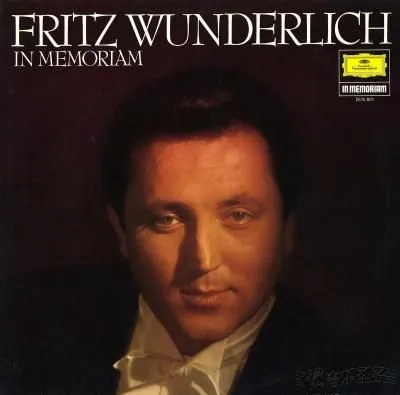
弗里茨·翁德里希(Fritz Wunderlich1930-1966),德语国家地区最著名的男高音歌唱家,被誉为史上最伟大的莫扎特男高音。
弗里茨·翁德里希,1930年9月26日出生于德国莱因一法尔茨州的一个名叫库塞尔的小镇,很小时便随母亲学习钢琴。父亲突然过世,小翁德里希只得过早地走向社会,到屠宰场当了一名学徒,以微薄的工资贴补家用。尽管屠宰场学徒的工作非常繁重,但喜爱音乐的翁德里希还是利用工余的时间学习了多种乐器。
1950年翁德里希考入弗莱堡音乐学院,而当时所学的专业却并非歌唱而是法国号。一次偶然的机会,翁德里希的歌唱才能被学院的声乐教授温特菲尔德教授发现,翁德里希改学了声乐。
1951年在弗赖堡以独唱家身份与巴赫合唱团合作首次演出。1954年在弗赖堡首次演唱歌剧,饰演《魔笛》中的塔米诺,后在法兰克福和慕尼黑演唱歌剧,被慕尼黑歌剧院聘为首席抒情男高音,这期间被认为是演唱莫扎特作品的优秀男高音。1958年参加艾克斯-昂普罗旺斯音乐节。20世纪60年代,翁德里希的歌唱事业开始向国际乐坛拓展。在此期间他不仅活跃于世界各大歌剧院,并且所饰演的人物也从莫扎特的歌剧而转向具有多种戏剧风格的角色。他演唱的法国、意大利和俄罗斯歌剧院同样精彩。这其中有柴科夫斯基的歌剧《叶甫根尼.奥涅金》、理查.施特劳斯《沉默的女人》、斯美塔纳《被出卖的新嫁娘》、瓦格纳《漂泊的荷兰人》、弗洛托《玛尔塔》、普契尼《艺术家的生涯》、玛斯内《玛侬》等。在演唱这些欧洲大歌剧的同时,翁德里希还演唱了不少精彩的艺术歌曲和轻歌剧。1965年在科文特花园剧院首次演出。
1966年参加爱丁堡音乐节。
然而,就在翁德里希演唱事业如日中天的时候,不幸的惨剧却在他的身上发生了:1966年9月17日晚,刚与朋友聚会回到家中的翁德里希,在就寝前从二楼书房取书返回一楼的卧室时,不慎踩到自己已经松开的鞋带上被其绊倒,致使从楼梯滚落。由于后脑被猛然撞击到楼下的石板上,遂当场昏迷不醒。虽被送进医院实施紧急抢救,但终因医治无效而与世长辞,时年仅36岁。
翁德里希的歌声音质甜美、松弛、舒展、流畅,他的不幸早逝,无疑是世界歌坛的一个巨大损失。然而,短短十一年的歌唱生涯足以令他名垂青史。他特别精通德语艺术歌曲和歌剧。他的一副得天独厚的嗓子,加上倾向开放母音,少用Covering的发声方法,强烈的音乐感和对歌词的灵敏,使他能将歌唱升华至更高境界。35岁时的他在欧洲已经是享负盛名。可惜,他在准备前往纽约大都会歌剧院演出的前夕遭逢不测。
摘自:https://baike.baidu.com/item/'>https://baike.baidu.com/item/Fritz Wunderlich/4890983?fr=aladdin
English Introduction
Friedrich "Fritz" Karl Otto Wunderlich(26 September 1930 – 17 September 1966) was a German lyrictenor, famed for his singing of theMozartrepertory and variouslieder. He died in an accident when he was only 35.
Wunderlich was born in Kusel in the Palatinate, Germany. His mother was a violinist and his father was a choirmaster. For a short time, the family kept the inn "Emrichs Bräustübl" (Emrich's Brewing Cottage). Fritz's father lost his job due to pressure imposed upon him by local Nazis, in addition to suffering from a severe battlefield injury. He committed suicide when Fritz was five years old.
He mastered several instruments while still a schoolboy and when he entered the Hochschule für Musik Freiburg in 1950, his principal study was the horn. Then the singing teacher Margarethe von Winterfeldt (de) discovered and trained his voice.
Wunderlich was soon noted as a brilliant young tenor, especially in Mozartian roles, but he later expanded his reach to the full range of the lyric tenor repertoire.
He occasionally sang and recorded minor Wagner roles such as the steersman in The Flying Dutchman, Walther von der Vogelweide in Tannhäuser, and the shepherd in Tristan und Isolde. He sang and recorded the role of the Italian Tenor in Der Rosenkavalier.
It was the fashion during Wunderlich's career for German theatres to perform operas in the local rather than original language. Therefore, most of his recordings of the standard operatic repertoire are sung in German, including Verdi's La traviata and Rossini's The Barber of Seville. (He sang his recording of the Verdi Requiem in distinctly Germanic Latin.) Wunderlich achieved the highest distinction within the German repertory. Of special importance is a recording of Mozart's The Magic Flute, conducted by Karl Böhm, in which Wunderlich gave a critically acclaimed performance as Prince Tamino, opposite baritone Dietrich Fischer-Dieskau in the role of Papageno. There is also a live performance of The Magic Flute recorded in 1960 at the Salzburg Festival, and several recordings as Belmonte in Die Entführung aus dem Serail. Recordings also exist of lesser-known Mozart operas such as Zaide and La finta giardiniera
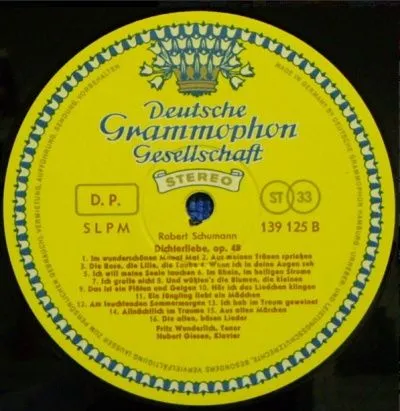
Wunderlich's crystal-clear voice, exquisite diction, and intelligent but passionate interpretation also led him to impressive renditions of the lieder cycles of Schubert and Schumann with pianist Hubert Giesen (de), who was also his artistic mentor. His famous recording of Schumann's Dichterliebe remains a gold standard of this genre. Many tenors since have emulated Wunderlich's interpretation of this cycle.
Another notable recording he left is J. S. Bach's Christmas Oratorio, with fellow singers Gundula Janowitz, Christa Ludwig, and Franz Crass, conducted by Karl Richter. He recorded an album of pre-Bach sacred songs, featuring music of Schütz, Telemann, Buxtehude, and other less well-known composers. With Christa Ludwig he recorded Gustav Mahler's Das Lied von der Erde with the Philharmonia Orchestra under Otto Klemperer.
At the time of his death, he had been recording Haydn's The Creation, with the Berlin Philharmonic and the Wiener Singverein under Herbert von Karajan with other soloists Christa Ludwig, Gundula Janowitz, Walter Berry and Fischer-Dieskau. Wunderlich had completed recording his arias, but Werner Krenn was hired to record the recitatives. Several recorded live performances of Wunderlich singing the whole part, under Karajan, survive.
Numerous anthology albums of him singing arias from opera and operetta are available.
Available videos include a full-length performance (in German) as Count Almaviva in The Barber of Seville (with Hermann Prey, Erika Köth and Hans Hotter), and a recital of operatic arias.
Wunderlich sang at the 1966 Salzburg Festival, but two weeks later his promising career was cut short by an accident while he was on a hunting vacation. He fell from a stairway in a friend's country house in Oberderdingen near Maulbronn due to carelessly tied shoes, and died in the University Clinic of Heidelberg just days before his 36th birthday. He was a few weeks away from his Metropolitan Opera debut in New York City as Don Ottavio in Mozart's Don Giovanni. Wunderlich is buried in Munich's Waldfriedhof cemetery.
From:https://en.wikipedia.org/wiki/'>https://en.wikipedia.org/wiki/Fritz Wunderlich